
Deciphering Casino Terms and Conditions

I have spent a substantial part of my professional life analyzing the fine print that is part of online casino platforms. What many players dismiss as legal padding is, in truth, the most direct contract between you and the operator. When you register at Slotoro Casino cookiepolicy from Sweden, the terms and conditions you acknowledge shape almost every aspect of your gaming journey — from how bonuses are activated to how you can withdraw your winnings. I maintain that reading these terms is not about being suspicious; it is about maintaining control. Swedish gambling regulation, enforced by Spelinspektionen, requires a high level of transparency, but the responsibility to comprehend the specifics ultimately falls on the individual. This article explores the critical sections I always examine, with examples drawn from Slotoro Casino’s own legal and affiliates page. By the time you finish, you will have a clearer perspective for evaluating any online casino’s terms, regardless of where it operates.
Why the Terms Act as Your Safeguard
A lot of users consider the terms and conditions as a click-to-accept formality, but I see them as the foundation of a balanced relationship. If a dispute arises — a delayed withdrawal, a forfeited promotion, or a suspended account — it is the terms file that both parties will refer to. I have observed cases where players lost money simply because they violated a regulation they had never gone through. In the gambling scene in Sweden, where consumer rights are robust, the site’s policies still bear significant legal weight, as long as they do not conflict with mandatory legislation. I consequently make it a practice to hunt for specific provisions: the company’s entitlement to amend terms, the situations under which an account can be cancelled, and the complaints handling pathway. Slotoro Casino’s legality section arranges these elements in a structured sequence, which helps minimise confusion. By making yourself familiar with these sections, you evolve from a passive user into an informed participant, and that shift can substantially decrease your exposure to unpleasant surprises. In my advisory sessions, I emphasise that these documents are living agreements that can change, so reading them regularly is a smart habit. The ability to grasp them quickly gives you a decisive advantage in any exchange with customer support.
Conditions for Bonuses: What Wagering Really Signifies
Promotional deals are among the most strictly controlled parts of any casino’s terms and conditions, yet they frequently hide the most important details in clear view. I always read the bonus clause before taking a single krona, because the headline figure is rarely what it looks like. A 100% match bonus up to 2 000 SEK might seem appealing, but the attached wagering requirement can transform it into a burden if you do not plan carefully. Wagering, or playthrough, governs how many times you must wager the bonus amount – and sometimes the deposit – before you can submit a withdrawal. I have observed requirements range from 20x to 50x, and each stage in the process is important. In Sweden, the Spelinspektionen restricts bonuses to one per licensee, which affects the dynamic for locally licensed casinos, but internationally licensed platforms like Slotoro Casino may offer recurring promotions that need careful scrutiny. The legal page of Slotoro Casino outlines these conditions in a user-friendly manner, detailing the playthrough multiplier and the timeline within which it must be met. I advise taking screenshots of these rules at the moment you activate a bonus, because operators can sometimes update their general conditions.
- Playthrough multiplier and whether it applies to bonus only or the deposit plus bonus.
- Game weightings: slots often account for 100%, but table games may contribute only 10% or be excluded entirely.
- Bet cap during wagering: surpassing a specific threshold, such as 50 SEK per spin, can cancel your bonus.
- Deadline to complete wagering: missing the deadline often causes forfeiture of bonus funds and related winnings.
- Restricted payment methods: specific e-wallets or cryptocurrency deposits may prevent you from getting a bonus.
I always determine the actual value of a bonus by multiplying the wagering requirement by the bonus amount and accounting for game contributions. For example, a 2 000 SEK bonus with a 35x wagering on slots requires 70 000 SEK in total stakes before any withdrawal is feasible. If the weight for blackjack is only 5%, that number becomes virtually impossible for a regular player. On Slotoro Casino’s legal page, the operator also mentions maximum conversion limits, implying that even after satisfying the playthrough, the amount you can cash out from bonus winnings may be restricted. I find this transparency very beneficial, because it prevents the disappointment of achieving a big win only to discover a hidden ceiling. Overlooking these sections is the fastest way to end up in a dispute, so I treat them as essential reading.
Safe Play Clauses and Player Protections
No examination of casino terms would be thorough without considering the responsible gaming duties that both parties consent to. In my experience, the most trustworthy operators incorporate these promises immediately into their terms and conditions, rather than assigning them to a distinct page few users visit. The Swedish Gambling Act mandates all licensed operators to offer self-exclusion via Spelpaus.se, but even casinos that are not licensed in Sweden often supply comparable tools, and the terms should spell out how you can enable deposit limits, loss limits, reality checks, and temporary or permanent self-exclusion. I seek language that describes the process as mandatory and instant, rather than a request that may be delayed. Slotoro Casino’s legal page references its responsible gaming framework and clarifies how you can set restrictions straight from your account dashboard. I also check whether the terms impose any sanctions for regular use of these tools, because a couple of dishonest operators have been known to close accounts after repeated self-exclusion requests. In Sweden, player protection is strong, but the terms still serve as your contract, and I advise documenting every responsible gaming action you take, including confirmation emails and timestamps. Understanding this clause is not just about compliance; it is about preserving your welfare and your bankroll.
Licensing and Jurisdiction: The Initial Checkpoint
Each time I evaluate an online casino, the first thing I search for is the licensing section. A valid license tells me that the operator is answerable to a supervisory authority, and that certain dispute resolution procedures are in place. In Sweden, Spelinspektionen holds a register of approved operators, but many Swedish-facing casinos operate under a Malta Gaming Authority or Curacao license. I always cross-reference the license number with the regulator’s database. The terms and conditions should state clearly the governing law and the competent jurisdiction for legal claims. On Slotoro Casino’s legal page, the licensing information is shown near the top, and the terms define the applicable law without ambiguity. This transparency instills confidence that the platform is not attempting to hide behind vague wording. Swedish players, however, should remember that if a casino is not licensed in Sweden, some local consumer protections may not apply, and bonus offers might follow different marketing rules. I therefore advise a quick verification step before depositing.
Monetary Conditions: Depositing Funds, Cashouts and Authentication
Comprehending how money moves in and out of a casino is often where the most friction happens, and I have come to understand to concentrate on three certain contractual elements: withdrawal limits, verification procedures, and processing times. Many terms and conditions specify a minimum withdrawal amount, a weekly or monthly cap on payouts, and the acceptable payment methods for both deposits and cashouts. In Sweden, the use of BankID and Trustly has simplified instant banking, but the terms may still mandate you to withdraw to the same method used for depositing. I also pay close attention to the Know Your Customer (KYC) verification clause. Operators like Slotoro Casino are legally required to verify your identity before processing a first withdrawal, and the terms will outline what documents are accepted, how to submit them, and how long the review might take. I have seen cases where players became annoyed because the timeline mentioned in the terms did not match their expectations, so I always allot extra days. Another element I check is the dormant account fee. If you do not log in for a set period, usually 12 to 24 months, the casino may deduct a monthly administrative fee, and this must be disclosed in the terms. Because Swedish krona transactions are supported by Slotoro Casino, I can avoid currency conversion fees, but I still ensure that the payment page aligns with the stated policies.
Affiliate Programme Rules: A Practical Guide
If you are thinking about becoming a partner with Slotoro Casino, the affiliate terms and conditions deserve the same level of scrutiny as the player-facing rules. I have reviewed numerous affiliate programmes, and the differences in revenue share models, carryover policies, and marketing restrictions can substantially impact your long-term earnings. Slotoro Casino’s dedicated legal and affiliates page consolidates these details, which I find efficient because it removes the need to jump between multiple documents. The first thing I check is the commission structure — whether it is a flat percentage, a tiered plan, or lup.lub.lu.se a CPA (cost per acquisition) hybrid — and how revenue is calculated. I then review the cookie duration, which determines how long after a click you can earn commission on a player’s activity. Because Swedish traffic can be highly valuable, I am careful about any geographic restrictions that might limit the countries from which you can refer players. The clarity of the payment schedule also matters: I need to know whether commissions are paid monthly, the minimum threshold for payout, and the supported methods such as bank transfer or e-wallet. All these elements shape the true profitability of an affiliate partnership, and overlooking even one can lead to disappointing results.
- Profit split percentage: confirm whether it is based on net gaming revenue and how withholdings such as licensing fees or chargebacks are processed.
- Negative carryover policy: determine if negative commissions roll over to the next month or reset, as this can significantly affect your cash flow.
- Cookie lifespan: understand the duration of the tracking cookie, which generally runs from 30 to 90 days.
- Payout minimums and method: note the minimum amount required before a payout is processed and the currency in which you will be paid.
- Marketing guidelines: examine any bans on PPC bidding on ads on the brand name, spam, or use of misleading promotional material.
Beyond the revenue arrangement, I always review the termination clauses and the dispute resolution mechanism. The terms should outline the advance warning required to end the collaboration and whether you keep any earnings on players referred before termination. I also want to see that the programme uses an independent tracking platform, because this delivers an impartial record of clicks and conversions. Slotoro Casino’s affiliate page includes sub-section links that make it convenient to access to these specific contractual points, which conserves time during due diligence. When I onboard an affiliate programme, I save or archive the terms at the start date, so that I have a benchmark in case the operator changes the general conditions later. In Sweden, where consumer law is robust, an affiliate agreement may still be controlled by the jurisdiction named in the contract, so I am mindful to whether it references Maltan, Curacao, or other international law. This preventive strategy has protected me from many disputes and has enabled me to build partnerships that truly pay.
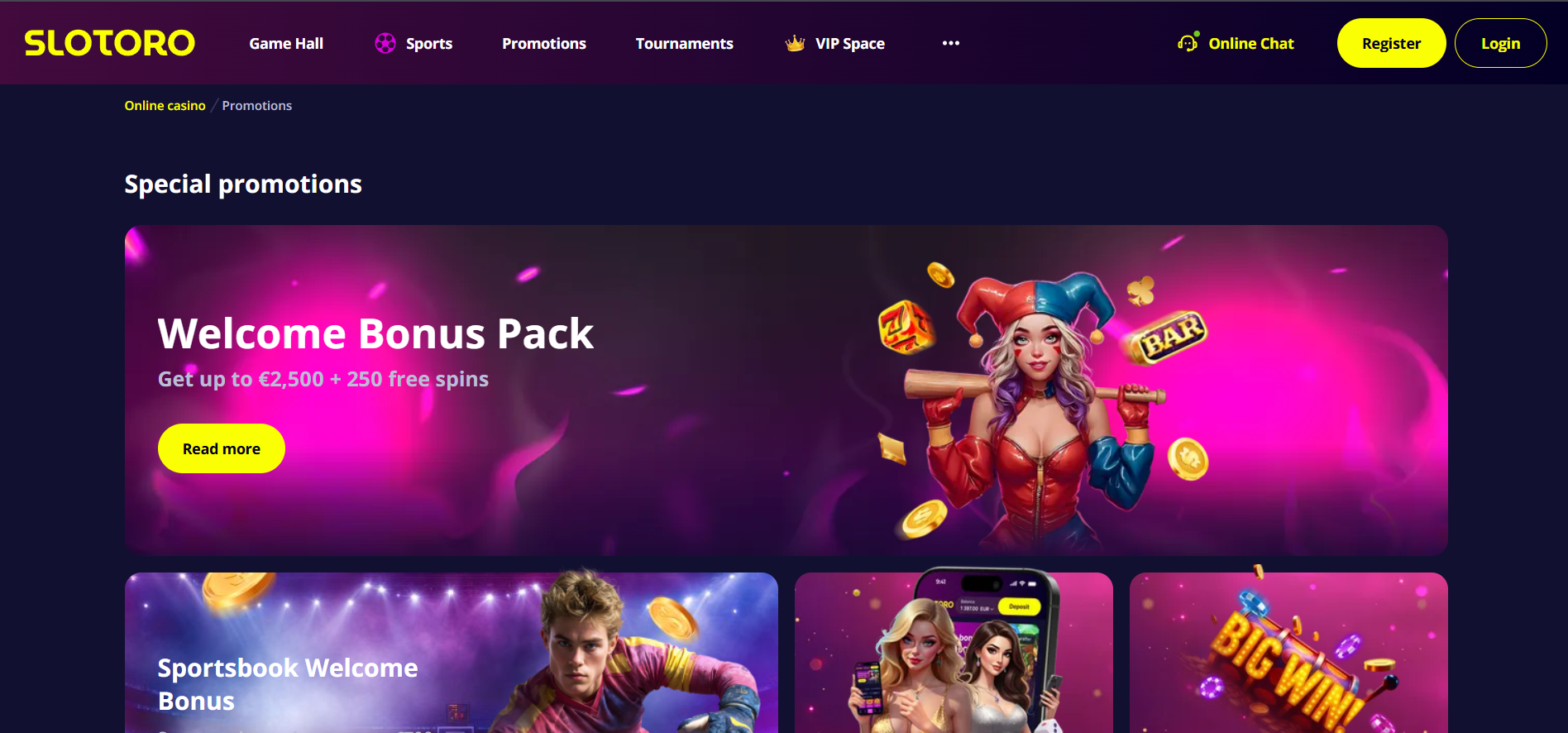
Deciphering of Legal Jargon on Slotoro Casino’s Page
Legal language can feel intimidating, but I have found that Slotoro Casino’s legal and affiliates page takes a surprisingly clear approach. The clauses are grouped under meaningful headings, which lets me jump directly to topics like bonus policy, withdrawal rules, or affiliate commission without scrolling through endless blocks of text. I also value that the page avoids unnecessary cross-referencing to external legislation, instead summarizing the key obligations in simple Swedish-adapted English. Even so, I always examine the entire document at least once, because seemingly unrelated sections can contain cross-default clauses — for example, a breach of the bonus policy might also contradict the general terms and lead to account suspension. When I stumble upon a term like “materially similar game” or “irregular play,” I make a note to ask support for clarification before trusting the text. In my experience, the willingness of an operator to explain vague phrasing is a trustworthy sign of how they will treat you when a dispute arises. Swedish consumers have strong regulatory protections, but the terms still function as the baseline, and I do not assume that good regulation overrides a poorly written clause. The search bar and internal links on Slotoro Casino’s page make it easy to locate definitions, which encourages active exploration rather than passive acceptance. Taking an extra fifteen minutes to examine these paragraphs can save you from situations that drag on for months. I have witnessed too many people skim the terms and later wish they hadn’t, so I treat the page as a risk management tool, not a formality.

admin
Top Rated Products
-
 VEGAN ZOMBIE LIGHTWEIGHT HOODIE Orange/BLK
$40.00
VEGAN ZOMBIE LIGHTWEIGHT HOODIE Orange/BLK
$40.00
-
 The Vegan Zombie Classic Lightweight Hoodie Green/BLK
Price range: $40.00 through $42.00
The Vegan Zombie Classic Lightweight Hoodie Green/BLK
Price range: $40.00 through $42.00
-
 VEGAN ZOMBIE HOODIE Orange/BLK
$48.00
VEGAN ZOMBIE HOODIE Orange/BLK
$48.00
-
 Women's Stranger Things Go Vegan T
$28.00
Women's Stranger Things Go Vegan T
$28.00
-
 Women's Green The Vegan Zombie
$28.00
Women's Green The Vegan Zombie
$28.00
Help us out

Our Friends!